You Become the Average of the Five People Around You

August 2026 – Farshad Farahnak. All rights reserved.
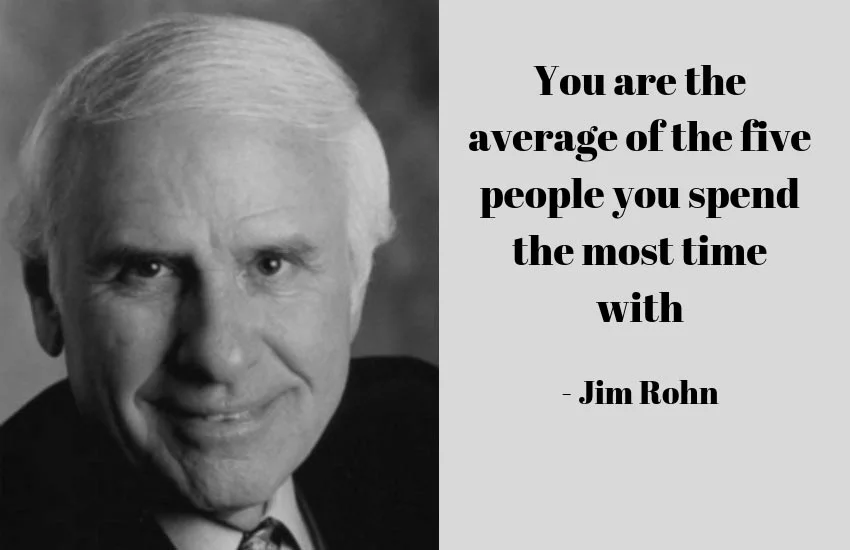
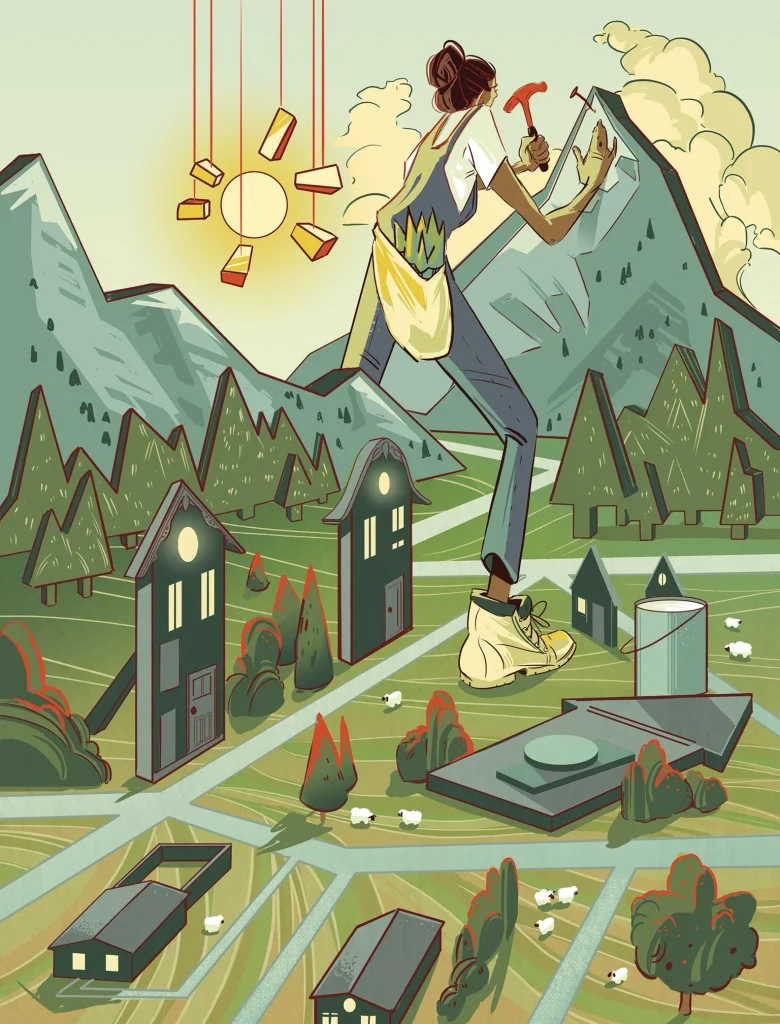
You’ve probably heard the line: you become the average of the five people you spend the most time with. It sounds simple, almost cliché. But it is one of the most practical truths about success and growth.

Those five people quietly shape what feels normal. They influence how you talk about problems, how long you stay with hard things, what level of effort looks reasonable, and whether setbacks feel like temporary data or final verdicts. Over time, their habits, standards, and emotional responses start to feel like your own. That is not mysticism. It is environment.

The toddler already understands this

Watch a toddler learning to walk. They fall. They fall again. They fall a hundred times. And still they get back up.

Why?

Not because they have mastered some advanced mental technique. Not because they have read books on resilience. They keep trying because everywhere they look, people are standing and walking. Upright movement is simply the normal way of being in their world. Every adult and older child around them is living proof that the goal is possible and expected. Falling does not redefine what is normal. The walkers do.

Now imagine the opposite. Suppose a child grew up in an environment where no one stood or walked. Crawling, or some other method, would feel like the standard. Effort toward upright walking would seem strange, maybe even unnecessary. The child would not keep trying the same way, because the surrounding evidence would point somewhere else.

That is exactly how adult life works.

The five people closest to you are constantly broadcasting what is normal. If they treat ambitious effort as ordinary, if they keep moving after setbacks, if growth is simply what people in that circle do, then persistence feels natural. Fear of failure shrinks because failure is just part of the shared pattern you see every day.

If those same five people have largely stopped trying, if they treat big goals as unrealistic or effort as optional, then quitting starts to feel like the reasonable, adult response. Your internal drive is real, but it is heavily shaped by the models in front of you.

This is why the quality of your associations matters so much. You do not rise to the level of your goals. You fall to the level of your environment. The people around you set the baseline for what counts as possible, what counts as enough, and how long it is acceptable to keep trying.

If the current five are not modelling the direction you want to go, you have a clear option: change the people around you. That does not always mean dramatic exits or harsh judgments. Sometimes it means spending less time with certain people and more time with others. Sometimes it means seeking out new circles where the standards match the future you want. The principle remains the same. If you can change the people around you, change the people around you.

Protect the environment that keeps effort looking normal. Surround yourself with people who are still walking. The toddler already knows how powerful that is.

The Longest Relationship You’ll Ever Have

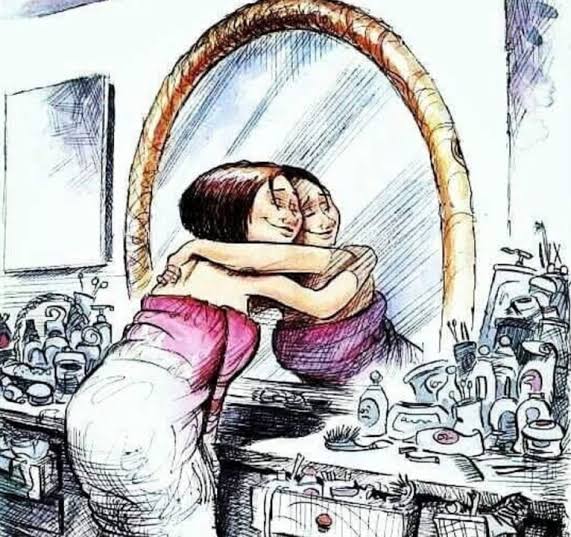
We have a relationship with ourselves longer than we do with anyone else.

It’s easy to forget that. We pour loyalty, compassion, and belief into the people we love — partners, friends, family, colleagues — and often leave ourselves with the leftovers. The critical voice. The impossible standards. The quiet withdrawal of kindness when we need it most.

Yet as the saying attributed to the Buddha reminds us:

“You yourself, as much as anybody in the entire universe, deserve your love and affection.”

This isn’t about bubble baths and positive affirmations (though those can be lovely). It’s about something quieter and more foundational: the way we speak to ourselves, the stories we carry about who we are, and the identity we either claim or outsource.

In my coaching work, and in my own life, the same themes keep returning — identity, self-trust, and the quiet courage it takes to become the person we are here to be. Not the version that keeps everyone comfortable. Not the one shaped by other people’s expectations. The one that feels true.

So I want to invite you to notice.

Notice the moments when you speak to yourself with kindness.
Notice the moments when you don’t.

These aren’t random. They reveal the quality of the relationship you have with yourself — and that relationship shapes everything else.

Here are three questions worth sitting with:

1. If you treated yourself with the same loyalty, compassion, and belief you offer your closest friend, what would change first?

Most of us already know how to show up for the people we love. The harder (and more transformative) work is turning that same steadiness inward.

2. What part of your identity have you been outsourcing to other people’s opinions, approval, or attention — and what would it look like to reclaim it?

This one often stings. We give away pieces of ourselves without realising it — our sense of worth, our direction, even our voice — until we barely recognise the person looking back at us.

3. When you strip away roles, expectations, and the version of you others are used to, who are you becoming — and what does that version of you need from you right now?

This is the quiet work of becoming. Not overnight reinvention. Just honest, consistent returning to yourself.

Reconnect to who you are and what you need. And if no one else buys you flowers, buy yourself some.

I’m currently creating a group programme for anyone who wants to explore this more deeply — a space to strengthen the relationship they have with themselves, reconnect with their inner voice, and step into a more aligned, more authentic version of who they are. Not because they “should,” but because something inside them is asking for it.

In the meantime, support is available in smaller ways:

  • 1:1 coaching
  • Group and corporate workshops

Wherever you are in this process, start simply.

One thing at a time.

Who Are You When the Labels Fall Away?

The 2003 movie Anger Management, featuring Adam Sandler as Dave and Jack Nicholson:

Jack: Tell us about yourself. Who are you?

Dave: Well, I’m an executive assistant at a major pet products company.

Jack: Dave, I don’t want you to tell us what you do. I want you to tell us who you are.

Dave: Oh, all right. Um… I’m a pretty good guy. I like playing tennis on occasion.

Jack: Also, not your hobbies, Dave. Just simple. Tell us who you are.

Dave: I just… Maybe you could give me an example of what a good answer would be.
Um, what did you say?

Jack: You want Lou to tell you who you are.

[laughter]

Dave: No, I just uh… I’m a nice, easygoing man. I might be a little bit indecisive at times. Um…

Jack: Dave, you’re describing your personality. I want to know who you are.

Dave: I don’t know what the hell you want me to say.

The Hardest Question 99% of People Can’t Answer

Most of us introduce ourselves the same way.
“I’m a [job title].”
“I’m a parent.”
“I’m a partner/sibling/friend.”

These roles matter. They shape how we move through the world. Yet they are not the whole of us.

Identity sits deeper. It is the essence beneath the hats we wear — our values, the beliefs we hold quietly, the passions that pull us forward, and the way we show up when no one is watching. Our worth has never lived in what we do. It lives in who we are at our core.

Bob Proctor once put it with striking clarity:

Most people don’t know who they are. They really don’t.
Ask the average person, and they will give you their name. “I’m Bob Proctor.” But Bob and Proctor are just two words — labels given by parents. They are not the person.
Someone points to their body and says, “This is me.” Yet the body is not the self either. We never call the studio to say, “Body won’t be in today — it’s sick.” We say “my hand,” “my leg,” “my body,” “my name.”

So who am I?

We live simultaneously on three planes: as spiritual beings, as beings with intellect, and as beings who inhabit physical bodies. When we lack awareness of this, we become locked into the physical world. Things outside us start to control us. Proctor observed that 95 percent of people are simply reacting to life rather than truly living it.

That observation lands with quiet force. So much of modern identity is built on reaction — to expectations, job titles, social roles, and the stories others have written about us. Yet identity and personality are not fixed. They are labels: useful at times, limiting at others, always incomplete. Even our most familiar “I am” statements can be rewritten.

Two voices help us sit with this:

“Be yourself; everyone else is already taken.” — Oscar Wilde

“Knowing yourself is the beginning of all wisdom.” — Aristotle

I lean toward Aristotle these days. The more clearly I have come to know myself, the greater my capacity for self-compassion — and the more understanding I can offer others. In the rush of everyday life, that feels like a rare and valuable thing.

For a long time I was lost in the roles I played, driven more by expectation than by purpose. It was only when I began to explore my own identity — through honest self-development and quiet reflection — that a real shift happened. I started becoming who I am here to be.

Now, as a coach, I walk alongside others on that same path: helping them uncover their true identity so they can step into a life that feels more aligned.

Here are two prompts to sit with, gently and without pressure:

  1. If you weren’t defined by your job or your roles, who would you say you are?
  2. When was the last time you felt truly aligned with what you were doing — and what was that moment really about?

You do not have to figure it all out at once. One honest question at a time is enough.

If this reflection has stirred something in you — if you are beginning to sense the difference between the roles you play and the person you are — I currently have space for a small number of 1:1 clients. This is simply an invitation to a conversation about what support might look like.

I am also opening the waitlist for my upcoming Identity Programme, Become Who You Are Here To Be. It is a self-development experience designed for anyone ready to reconnect with who they truly are, build steadier confidence, and create a life that feels deeply aligned with their values, purpose, and potential. Those on the waitlist will be the first to hear when doors open and will receive an invitation to a free Identity Workshop that explores how we see ourselves — and why others might see us differently.

Wherever you are in this process, you are already enough. The work is simply to remember.

The next time someone asks who you are, what will you choose to say?

Different Versions of You

A minimum of three versions of you exist.

The one at work.
The one at home.
And the one when nobody’s watching at all.

If they don’t look much like each other, that’s worth noticing.

Who are you when no one’s watching? And how far is that person from the one who shows up on a Monday morning?

The gap in between is usually where the exhaustion lives.

A Client Story

An IT manager I worked with was made redundant, then landed a new leadership role — a step down from where they had been. Overnight, they were wearing two masks. One for former peers, to prove they still had authority. One for the new team, to earn the right to lead them.

Neither mask was a lie. Holding both, all day, was still exhausting.

That’s identity labour. It’s far more common than most of us realise — and most of us don’t recognise it or admit it’s there.

This Carries a Cost

Sociologist Arlie Hochschild called it emotional labour: the ongoing work of managing how you come across to fit a role, whatever you’re actually feeling underneath. The pure performance — what she called surface acting — is the most draining kind there is.

Burnout doesn’t only come from overwork. It often comes from pretending to be someone you aren’t, or don’t feel like you are.

Here’s a quote that captures it sharply:

“We are so accustomed to disguising ourselves to others, that in the end, we become disguised to ourselves.”
— François de La Rochefoucauld

When I read this, it feels exhausting. And a little sad. Because we should all be allowed to be ourselves — authentic, and free to show up as who we are.

Authentic Isn’t the Same as Unfiltered

Herminia Ibarra’s research on the authenticity paradox makes an important point: clinging too rigidly to a fixed version of yourself can actually stunt your growth, especially as a leader. Trying on new ways of showing up isn’t fakery. It’s how people expand.

The real skill isn’t dropping every mask.
It’s knowing whether you are wearing one — and which one you’re hiding behind because it doesn’t feel safe to be seen.

Three Coaching Questions

Take five minutes to journal on these:

  1. Who are you when no one’s watching, and how different is that person from who you are at work?
  2. Whose approval are you performing for right now — and would they actually notice if you dropped the act?
  3. If you stopped wearing the mask tomorrow, what’s the risk you’re actually afraid of? Is it still true?

These questions are simple. Sitting with them honestly is not always easy — and that’s usually where the useful work begins.


If you’re finding yourself stretched between who you are and who you feel you need to be — whether that’s imposter syndrome, a new promotion, a role that doesn’t quite fit, or simply the quiet sense that you’re performing more than you’re living — that’s the work I do one-to-one.

You’re welcome to book a free call if a conversation would be helpful.

I’m also running The Change Pathway, a small-group programme focused on identity, mindset, and the beliefs that shape how we show up. It’s a space to understand yourself more deeply and step into what’s next with greater clarity and confidence.

Wherever you are with this, you don’t have to figure it all out at once.

One honest look in the mirror is a solid place to start.

How the Mind Constructs Reality

An ancient text written nearly 2,000 years ago described exactly how the mind constructs reality. And the strangest part is, it wasn’t wrong.

The text is called the Corpus Hermeticum, written between the 1st and 3rd centuries AD and attributed to a mythical figure called Hermes Trismegistus, said to hold a hidden knowledge of both the visible and the invisible world. For centuries, it was dismissed as ancient mysticism.

Then modern neuroscience started describing reality in ways that the Hermetic texts had already outlined.

Here’s the core idea: the mind doesn’t passively receive reality—it participates in it, constructs it. What you experience as the world isn’t the world as it is; it’s the world filtered through everything you’ve been taught to see: every belief formed early, every conclusion drawn before you had the tools to question it.

Modern science calls this predictive coding. The brain generates a prediction of what it expects to find and filters reality through that prediction. You don’t see what’s there—you see what your mind expected to find.

A similar principle appears in Neuro-Linguistic Programming. NLP observes that we do not experience reality directly; we experience our internal maps of it — maps built from language, belief, and past filtering. Change the map, and the experience of the territory changes.

Two thousand years ago, the Hermetic tradition called this the veil.

But here’s what the Corpus Hermeticum did that most ancient texts didn’t: it didn’t treat the veil as a prison—it treated it as an invitation. If the mind participates in constructing what you experience, then refining the mind changes what becomes visible to you. Not by changing the world, but by changing the lens.

The Hermetic tradition calls this the Great Work.

Most people never examine the lens. They spend their entire lives looking through it, calling what they see the truth.

Which leaves one question worth sitting with tonight: If reality is partly constructed by a mind that was shaped before you were old enough to shape it yourself, how much of what you call the world is actually the world—and how much is just the lens looking at itself?

The Voice in Our Head – Chatter

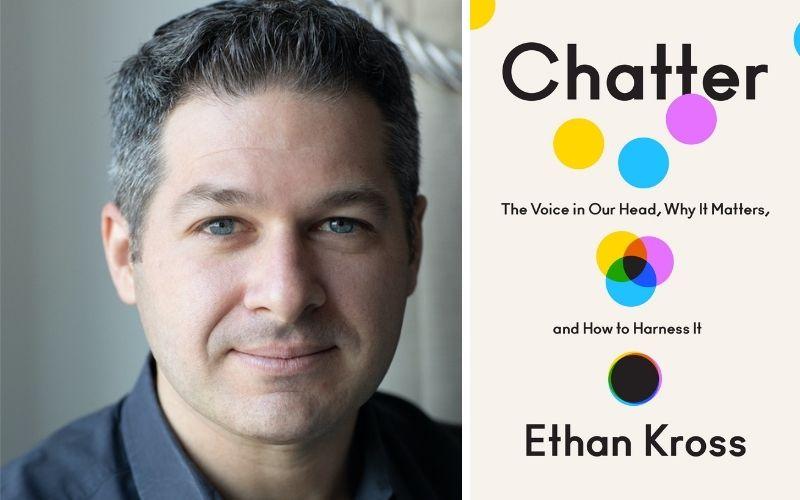
A psychologist named Ethan Kross discovered that the way your inner voice phrases things is quietly determining the outcome of your life. And he called it chatter. And what he found changes how you hear every thought that you’ve ever had.

Most of us treat the voice in our head as neutral background noise. We assume it’s just “thinking” — processing what happened, figuring things out. Research by psychologist Ethan Kross suggests otherwise.

Kross calls the repetitive, negative version of that inner voice chatter. It’s the loop that replays a setback, analyses every detail, and pulls you deeper into the emotion instead of helping you move through it. It feels like problem-solving, but it often keeps you stuck.

His research points to a simple shift that can interrupt the loop and change how the voice speaks. Instead of first-person statements like “I failed. I don’t know what to do. I can’t handle this,” people who referred to themselves by name or in the third person loosened the loop and regained clarity more quickly. For example, using phrases such as “Travis is going through something hard. He’s handled hard things before” tends to reduce emotional intensity.

Kross and colleagues have tested this across multiple studies. The language of the inner voice appears to influence how the nervous system responds to stress. Speaking to yourself the way you might speak to a friend creates a small but useful psychological distance. Same mind, same problem, different language — and often a different outcome.

Most of us spend years learning how to talk to other people. Far fewer of us examine the tone and style of the conversation that runs constantly inside our own heads. That internal dialogue shapes how we experience stress, failure, and resilience more than most external conversations ever will.

The next time the voice starts replaying something on a loop, try a quiet experiment: switch to third person or use your own name. Notice what happens to the intensity.

How Your Brain Filters Reality – RAS

August 2026 – Farshad Farahnak. All rights reserved.

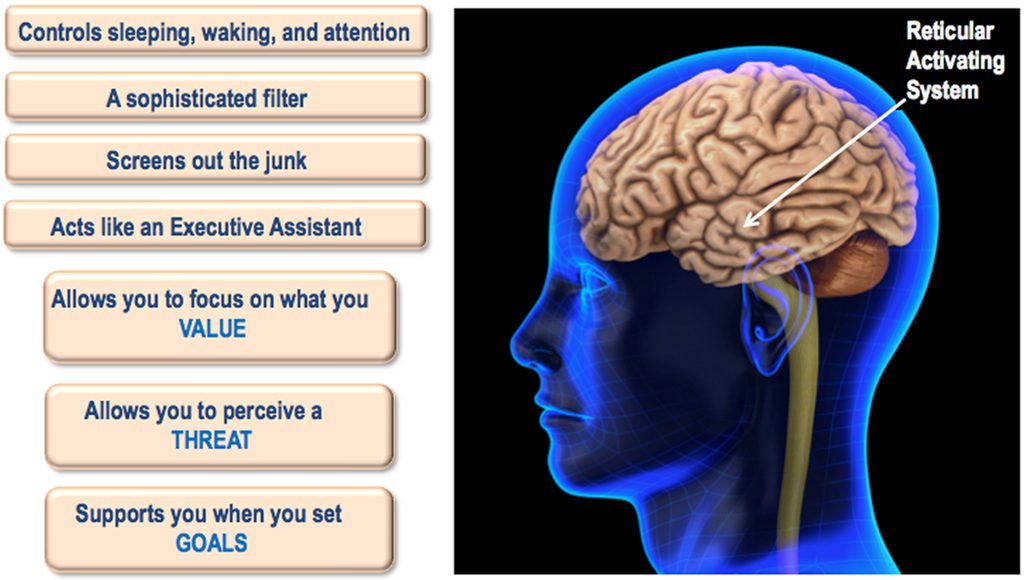
Your senses deliver around one billion bits of raw sensory data every second, but your conscious mind can process only 10–50 bits per second. Because of this enormous gap, the brain must filter almost everything. It uses a multi‑layered system — especially the Reticular Activating System (RAS) and the thalamus — to decide what gets through and what gets deleted.

The filtering process prioritises information based on:

  • Survival relevance (threat, movement, sudden changes)
  • Novelty (anything unexpected)
  • Biological needs (pain, hunger, temperature)
  • Emotional significance (fear, attachment, reward)
  • Personal relevance (your name, your child’s voice, your goals)

Anything that does not meet these criteria is suppressed or deleted before you ever become aware of it.

The brain’s filtering is driven by two major forces working together:

  1. Survival relevance — hard‑wired, biological, automatic
  2. Learned relevance — shaped by knowledge, perception, childhood experiences, and beliefs

This combination determines what gets processed and what gets ignored.

A useful analogy is to think of the brain as a radio receiver. A radio receives millions of frequencies at once, but you only hear the station you are tuned to. The RAS acts like the tuning dial: it selects the “frequency” (information) that matters and filters out the rest.

Crucially, you can train your brain to tune differently. Through learning, repetition, and experience, you can change which information is filtered out and which information is considered important. This is the foundation of many subconscious‑mind training techniques, cognitive reframing, and attentional retraining.

Over time, these processes can influence how you interpret the world, how you respond to challenges, and how you experience emotions. While they are not a cure‑all, they demonstrate that the brain is plastic — it can be rewired to support healthier patterns of perception, attention, and emotional regulation.

You meet people on the same level of psychological wound as you

You meet people on the same psychological wound as you. You also leave people if you evolve out of that and they haven’t been able to.

This concept, highlighted by neuroscientist Dr. Tara Swart, explains why we often repeat unhealthy relationship cycles. Instead of seeking what is truly healthy, our brains look for what feels familiar.

How Psychological Wounds Shape Relationships

Familiarity over safety: If your past involved chaos or emotional distance, your nervous system mistakes those painful dynamics for “home”.

Matching stress levels: People unconsciously sense stress hormones and emotional pain in others, drawing matching energies together.

Replaying old stories: We may choose partners who mirror past hurts, hoping to force a different, happier ending to an old story.

What Happens When You Heal

Changing frequencies: As you do the inner work to heal your core self, your tolerance for dysfunction drops.

Natural parting: When you evolve past a certain level of wounding, you naturally pull away from or leave behind people who remain stuck in their pain.

New alignment: A healed emotional state attracts stable, supportive, and emotionally safe connections.

Your Beliefs

A belief is a mental state or acceptance that an idea, thing, or proposition is true, even without absolute proof or direct knowledge. Beliefs act as inner maps that help people make sense of the world, guide everyday choices, and shape personal identity

Your beliefs become your identity. Your beliefs become your prism through which you will see the world and receive information. Your beliefs will filter the information that does not match them.

People often reject facts that conflict with their beliefs because changes feel like a threat to safety and self-image. They grow from repetition, personal background, and lessons from family or society. Deep, firm ideas about oneself, others, and the world are called core beliefs.

Belief

A feeling of certainty that something exists or is true. Nelson Mandela’s belief in equality and justice inspired many people around the world to fight for human rights and strive for a better future.

Faith

Strong trust or confidence in something or someone. Rebecca has a deep faith in the power of kindness.

Conviction

A firmly held belief or opinion. Their shared conviction in the importance of education united them in their efforts to improve schools in their community.

Value

Principles or standards of behaviour. Paul’s strong belief in the value of hard work
and perseverance has always guided his career choices.

Principle

A basic rule or idea that guides how something is done or how someone
behaves. Mark lives by the principle of treating others as he wants to be treated.

Limiting Belief

A limiting belief is a thought, assumption, or conviction that holds you back from reaching your potential, taking action, or achieving what you want.

It acts like an invisible mental barrier. These beliefs are often false, exaggerated, or outdated, yet they feel true and influence decisions, behaviour, and self-image.

Why You’re Really Stuck

Most people think they’re stuck because of their job, money, relationships, or external situation. The real reason is usually simpler: you’re still holding on to something that is already good—but no longer great.

You must let go of something good to get something great.

Growth requires space. Just as a forest needs fire to clear old undergrowth so new life can emerge, you often need to release what’s currently working before something better can arrive. Clinging to the familiar keeps the next level from entering.

This idea appears throughout success literature—from Napoleon Hill’s “in every adversity is the seed of a greater benefit”. Even the biblical story of Job shows that greater abundance returned only after complete surrender and release of attachment. After losing everything, Job surrendered without attachment to a specific outcome. Only then did he receive back far more than he had before.

The practical takeaway is clear: if your life feels stalled despite hard work, the blockage is rarely external. It’s the grip you still have on what is already there. Let it go, create the void, and make room for what’s next.

You’re not stuck because of circumstances. You’re stuck because you’re still holding on to what’s already there. Release it, create the space, and better things can arrive.