
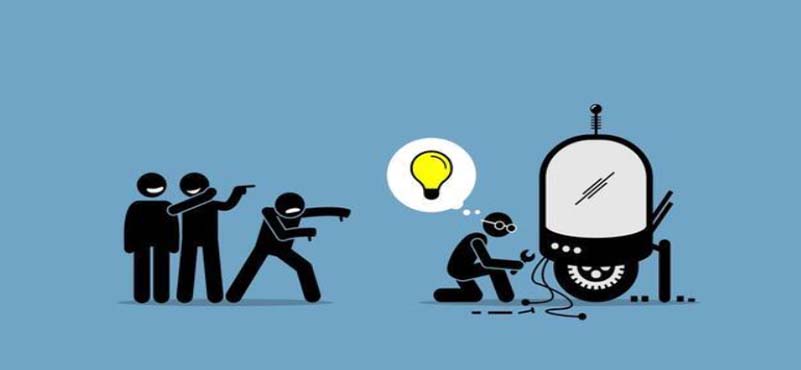
A famous painter once wanted honest feedback on his work. One morning he carried one of his finest paintings into a crowded public square and placed a simple note beneath it:
“If you find any mistake in this painting, mark it with a cross.”
When he returned at the end of the day, his heart sank. The painting was covered in crosses. Almost every detail had been criticised. Discouraged, he took the painting to a close friend and said, “Perhaps I am not as talented as I thought.”
His friend smiled gently. “Do not lose hope. Paint the exact same picture again without changing a single thing. Tomorrow we will try something different.”
The next morning they placed the identical painting in the same square. This time the note read:
“If you find any mistake, please correct it. Brushes and paints are provided.”
When the painter returned that evening, the canvas was untouched. Not one person had lifted a brush.
His friend looked at him and said:
“People are always ready to point out what is wrong, but very few have the knowledge, courage, or ability to make it right. Criticism is easy. Contribution is difficult.
So before you allow someone’s opinion to define your worth, ask yourself one question: Can they offer a better solution, or are they simply pointing at the problem?”
We live in a world overflowing with critics. Comments, reviews, side-eye glances, and casual remarks arrive daily, often from people who have never attempted the work themselves. It is easy to spot a flaw. It costs almost nothing to mark a cross.
But offering a real solution? That requires skill, humility, time, and courage. Most people will never pick up the brush.
The next time someone’s criticism lands heavily on you, pause. Ask the quiet question the painter’s friend taught him. If the person cannot (or will not) offer something better, their opinion does not deserve the power to shrink your confidence or dim your vision.
Protect your creative energy. Keep painting. And when you do offer feedback to others, try to bring the brush—not just the cross.
Because the world already has enough critics.
What it needs more of are people willing to contribute.