
August 2026 – Farshad Farahnak. All rights reserved.
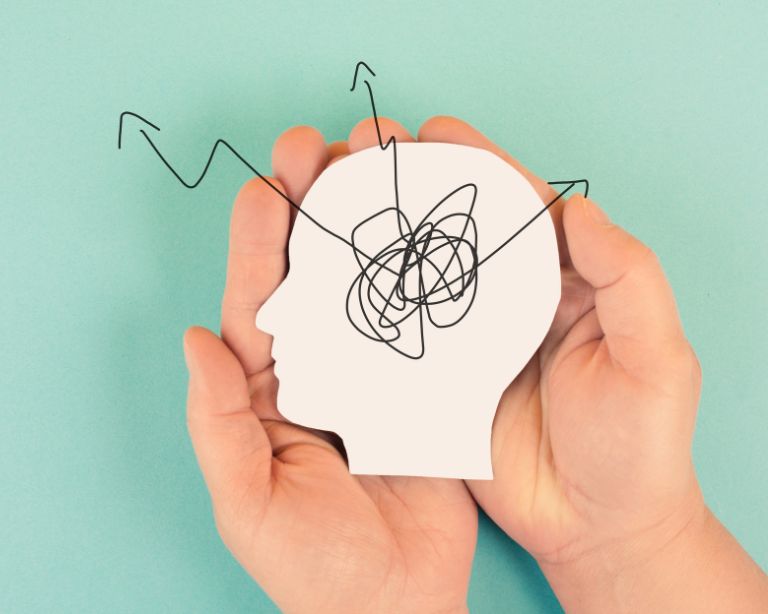
Why do most of us react impulsively in many situations?
Why is thinking so hard for many of us?
Imagine you accidentally touch a hot stove.
In a fraction of a second, your hand jerks away. You didn’t decide to pull back. You didn’t weigh the options, check your memory for past burns, or consciously conclude “this is dangerous.” The movement happened first. Only afterwards did the conscious thought arrive: “That was hot. That hurt.”
That split-second reaction is your nervous system’s autopilot at work. And it is far more common than most of us realise.
The Fast Path: Reflexes That Don’t Wait for Permission
Some protective actions never need the higher parts of the brain at all. The classic withdrawal reflex from intense heat or pain is handled largely at the spinal-cord level. Sensory signals travel into the spinal cord, connect through interneurons, and immediately send motor commands back out to the muscles. The whole loop can finish in well under a tenth of a second.
Higher centres (brainstem, cerebellum, and cortex) can modulate or refine these responses, but the initial protective action is designed to be fast and local. Evolution favoured speed over perfect accuracy. Better to yank your hand away from something that might be dangerous than to wait for a full conscious evaluation and risk serious injury.
Of course the system is not flawless. Extreme cold can occasionally trigger a similar protective pull, or a sudden intense sensation can be momentarily misread. A few seconds later conscious awareness catches up, and you realise the object was simply very cold, not burning. The reflex still served its purpose most of the time: it erred on the side of safety.
The Slow Path: Conscious Thinking Is Expensive
Contrast that with full conscious processing. Information has to travel farther, be compared with existing memories, evaluated against goals and risks, and then translated into a deliberate decision. That process is slower, more flexible, and metabolically costly. The brain accounts for a disproportionate share of the body’s energy use, and the networks involved in deliberate reasoning and self-control are especially hungry.
This is why so much of daily life runs on autopilot. Walking a familiar route, driving a well-known commute, typing on a keyboard, or reaching for your coffee in the morning can all happen with minimal conscious oversight. Once a pattern has been repeated enough times, the brain shifts control toward more efficient circuits. What once required focused attention becomes smoother, faster, and eventually almost effortless—sometimes even possible with your eyes closed.
Why We Default to Autopilot (and the Crowd)
Active thinking takes energy and a certain amount of psychological effort. Faced with that cost, most people prefer routines. Routines feel safe, predictable, and cheap. The same principle helps explain why we so readily follow the crowd. When many people around us are doing something, treating their behaviour as a ready-made answer is often easier than independently analysing the situation. Social conformity can function as another form of cognitive autopilot.
None of this means conscious thought is rare or unimportant. It means the brain is economical. It reserves the expensive, flexible mode for novelty, complexity, or high-stakes decisions, and lets practised patterns run in the background the rest of the time.
From Awkward to Automatic: How New Skills Change
Watch someone learn a new physical or cognitive skill—playing an instrument, driving a car, speaking a foreign language, or even navigating a new software interface. At first every step demands attention. Performance is slow, effortful, and error-prone. With repetition, the same actions become smoother. Attention can be redirected elsewhere. Eventually the skill can feel almost unconscious.
This transition from controlled to automatic processing is one of the brain’s most useful features. It frees limited conscious resources for the next novel challenge.
Conclusion: Why We Cling to the Familiar and Sometimes React First, Think Later
This is also why so many of us prefer repeated tasks and quietly resist change or new learning. Once the brain has wired a reliable autopilot program, sticking with it feels effortless. Learning something new, or deliberately altering a habit, forces the system back into the costly, attention-demanding mode. Avoiding that effort is not laziness in the moral sense—it is the brain doing what it evolved to do: conserve energy.
The same wiring explains many impulsive reactions. Because the brain gradually strengthens the pathways it uses most, certain emotional or behavioural responses become automatic. We snap, withdraw, agree, or act before the slower conscious system has time to evaluate whether that response is actually the best one. Only afterwards do we realise a more measured reaction would have served us better.
The autopilot is not the enemy. It keeps us safe, efficient, and functional. The practical skill is recognising when it is running an outdated or suboptimal program—and choosing, in those moments, to spend the energy required to override it.