
How the Mind Constructs Reality

An ancient text written nearly 2,000 years ago described exactly how the mind constructs reality. And the strangest part is, it wasn’t wrong.

The text is called the Corpus Hermeticum, written between the 1st and 3rd centuries AD and attributed to a mythical figure called Hermes Trismegistus, said to hold a hidden knowledge of both the visible and the invisible world. For centuries, it was dismissed as ancient mysticism.

Then modern neuroscience started describing reality in ways that the Hermetic texts had already outlined.

Here’s the core idea: the mind doesn’t passively receive reality—it participates in it, constructs it. What you experience as the world isn’t the world as it is; it’s the world filtered through everything you’ve been taught to see: every belief formed early, every conclusion drawn before you had the tools to question it.

Modern science calls this predictive coding. The brain generates a prediction of what it expects to find and filters reality through that prediction. You don’t see what’s there—you see what your mind expected to find.

A similar principle appears in Neuro-Linguistic Programming. NLP observes that we do not experience reality directly; we experience our internal maps of it — maps built from language, belief, and past filtering. Change the map, and the experience of the territory changes.

Two thousand years ago, the Hermetic tradition called this the veil.

But here’s what the Corpus Hermeticum did that most ancient texts didn’t: it didn’t treat the veil as a prison—it treated it as an invitation. If the mind participates in constructing what you experience, then refining the mind changes what becomes visible to you. Not by changing the world, but by changing the lens.

The Hermetic tradition calls this the Great Work.

Most people never examine the lens. They spend their entire lives looking through it, calling what they see the truth.

Which leaves one question worth sitting with tonight: If reality is partly constructed by a mind that was shaped before you were old enough to shape it yourself, how much of what you call the world is actually the world—and how much is just the lens looking at itself?
Why Relationships Get Harder Over Time and Why That’s Normal

August 2026 – Farshad Farahnak. All rights reserved.

When you first meet someone, you see them from a distance. That view is selective, incomplete, and usually flattering. Driven by attraction, the mind fills the missing gaps with optimistic assumptions, highlighting charm and strengths while leaving flaws soft or invisible.

As a relationship deepens—especially when moving in together—that distance vanishes. You transition from a wide lens to a magnifying glass, observing the other person’s daily patterns, stress responses, and unpolished habits up close.

It is like viewing a mountain from afar: from a distance, the peak looks smooth and majestic. But as you draw near and begin to climb, the terrain changes. You encounter hidden rocks, steep inclines, and rough surfaces that were invisible from the valley floor.

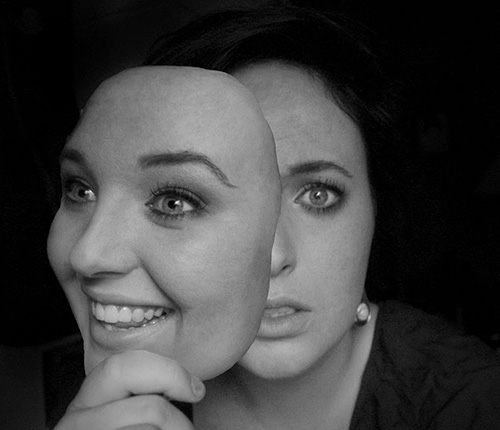
At the same time, the social masks come off. Outside the home, maintaining a managed, pleasant persona takes energy. At home, the incentive to perform drops, and it becomes too costly to sustain the ideal self day after day. What emerges is each person’s default operating system: unfiltered moods, default reactions, and raw approaches to frustration or boredom. Because both partners drop their guard simultaneously, the contrast with the early, curated phase can feel jarring.

Crucially, the qualities that initially drew you in can begin to work against you. A protective personality starts to feel overbearing; inspiring standards turn into frequent criticism; refreshing independence feels like emotional distance. The traits haven’t changed, but their daily impact on you has.

Here, frequency becomes decisive. A minor irritation experienced occasionally is manageable. That same behaviour, repeated daily, becomes a steady friction point that the mind registers as a new, frustrating reality. It is like rubbing a cloth against your skin: while pleasant at first, constant repetition over time will eventually cause irritation. Once that skin is raw, even a gentle touch can trigger a sharp, painful reaction.

This dynamic isn’t unique to romance—it unfolds among business partners, close collaborators, and anyone sharing high-interdependence spaces.

Ultimately, relationships rarely become harder because someone suddenly changed. They change because the filters came down, the full picture emerged, and managing that reality requires far more effort than enjoying the initial view. The couples who thrive are simply the ones who recognise this shift and actively learn to navigate the terrain once the masks are gone.

Navigating the Shift in Your Relationship? Recognising that the terrain has changed is the first step. If you and your partner are feeling the friction of the “unmasked” phase and want to build a smoother way forward together, let’s talk.

The Voice in Our Head – Chatter

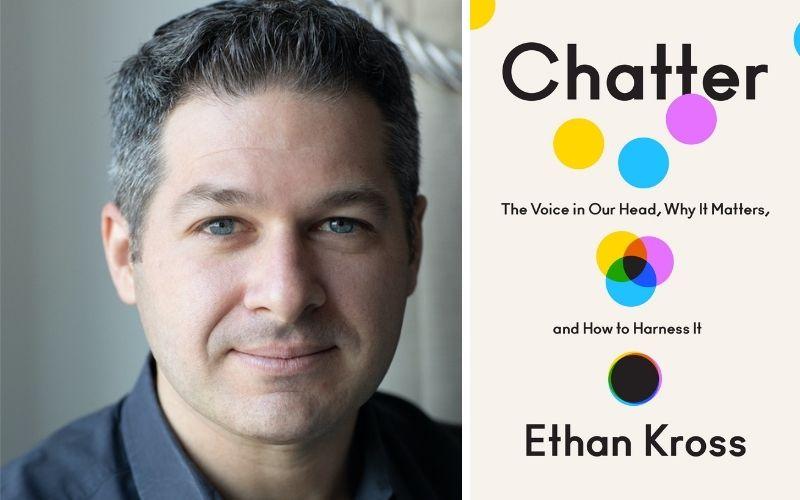
A psychologist named Ethan Kross discovered that the way your inner voice phrases things is quietly determining the outcome of your life. And he called it chatter. And what he found changes how you hear every thought that you’ve ever had.

Most of us treat the voice in our head as neutral background noise. We assume it’s just “thinking” — processing what happened, figuring things out. Research by psychologist Ethan Kross suggests otherwise.

Kross calls the repetitive, negative version of that inner voice chatter. It’s the loop that replays a setback, analyses every detail, and pulls you deeper into the emotion instead of helping you move through it. It feels like problem-solving, but it often keeps you stuck.

His research points to a simple shift that can interrupt the loop and change how the voice speaks. Instead of first-person statements like “I failed. I don’t know what to do. I can’t handle this,” people who referred to themselves by name or in the third person loosened the loop and regained clarity more quickly. For example, using phrases such as “Travis is going through something hard. He’s handled hard things before” tends to reduce emotional intensity.

Kross and colleagues have tested this across multiple studies. The language of the inner voice appears to influence how the nervous system responds to stress. Speaking to yourself the way you might speak to a friend creates a small but useful psychological distance. Same mind, same problem, different language — and often a different outcome.

Most of us spend years learning how to talk to other people. Far fewer of us examine the tone and style of the conversation that runs constantly inside our own heads. That internal dialogue shapes how we experience stress, failure, and resilience more than most external conversations ever will.

The next time the voice starts replaying something on a loop, try a quiet experiment: switch to third person or use your own name. Notice what happens to the intensity.

Daily Habits of Millionaires

Thomas C. Corley: The Researcher Who Mapped the Daily Habits of Millionaires

While many people debate whether wealth comes from luck, talent, or inheritance, one researcher spent five years studying what the rich actually do every day—and how those habits differ from people living in poverty.

That researcher is Thomas C. Corley, a CPA, certified financial planner, and author best known for his “Rich Habits” studies.

Who Is Thomas C. Corley?

Corley is a practical, numbers-driven researcher rather than a pure academic. As a financial professional, he became curious about the gap between people who build lasting wealth and those who struggle. Instead of relying on theory, he decided to interview both groups directly and track their daily behaviours over time.

His work resulted in the book Rich Habits: The Daily Success Habits of Wealthy Individuals and several follow-up titles that expanded on the original findings.

The Research

Over five years, Corley interviewed 233 wealthy individuals (177 of them self-made millionaires) and 128 people living in poverty. He gathered more than 340 data points through detailed questionnaires and conversations. The goal was simple: identify the specific habits that consistently separated the two groups.

The results revealed clear, measurable differences in how each group spent their time, money, and attention.

Key Findings

Here are some of the strongest patterns from Corley’s research:

HabitRich / Self-MadePoor
Read for self-education 30+ minutes a day88–96%~2%
Set and review specific goals daily80–95%~12%
Save 20% or more of income94%+Near 0%
Believe wealth comes mainly from habits (not luck)84–97%Only ~21%
Exercise regularlyHighLow
Track finances / balance checkbook monthly94%+~32%

Corley also identified four main paths people took to become millionaires:

  1. Saver-Investor — Consistent saving and prudent investing (average ~32 years to roughly $3.3 million)
  2. Virtuoso — Becoming highly skilled in a valuable field
  3. Big Company Climber — Rising through the ranks of a large organisation
  4. Dreamer-Entrepreneur — Building a business (the fastest path in his data: average 12 years to about $7.4 million)

Other recurring themes included continuous learning, deliberate relationship-building and mentorship, optimism, calculated risk-taking, and steady daily progress on long-term goals.

Why It Matters

Corley’s research is especially useful because it focuses on behaviours most people can start changing immediately. Unlike studies that examine only the ultra-wealthy or pure personality traits, his work highlights everyday disciplines—reading, goal-setting, saving, exercising, and networking—that compound over years.

The message is empowering: wealth is less about secret knowledge or rare talent and more about consistent habits practised over a long period. Many of the millionaires in his study were not flashy high-earners; they simply made better daily choices with their time and money than their peers.

In a world full of get-rich-quick advice, Corley’s findings offer something rarer—a clear, research-backed picture of what ordinary people who became millionaires actually did differently, day after day.

What makes someone extremely wealthy?

Rainer Zitelmann: The Historian Who Interviewed the Super-Rich

What makes someone extremely wealthy? Is it genius, luck, inheritance—or something deeper in their personality and mindset?

German historian and sociologist Rainer Zitelmann set out to answer that question by doing what few researchers have managed: sitting down for long, candid conversations with dozens of multimillionaires and billionaires.

Who Is Rainer Zitelmann?

Born in 1957, Zitelmann holds two doctorates—one in history (summa cum laude) and another in sociology. He has worked as an academic, newspaper editor, and successful entrepreneur. In 2000 he founded a PR firm focused on the real-estate industry, built it into the market leader, and sold it in 2016. He is also a prolific author whose books have been translated into dozens of languages.

His second doctoral dissertation, published as Psychologie der Superreichen (English title: The Wealth Elite), is his most distinctive contribution.

The Research

Between 2015 and 2016, Zitelmann conducted in-depth interviews with 45 ultra-high-net-worth individuals. Most were self-made. Their net worth typically ranged from €30 million to €1 billion (some higher). Each conversation lasted one to two hours, producing roughly 1,700 pages of transcripts. Nearly all participants also completed a detailed Big Five personality test.

What He Found

Several clear patterns emerged:

  • Personality profile: Higher conscientiousness, extraversion, and openness to experience. Lower neuroticism (greater emotional stability) and lower agreeableness (more willingness to engage in conflict).
  • Nonconformism: Many described themselves as people who enjoy swimming against the tide and challenging conventional opinion.
  • Sales ability: Two-thirds said persuasion skills were decisive for their success; more than one-third attributed 70–100% of their achievements to the ability to sell and convince others.
  • Intuition over pure analysis: Gut feeling—built through years of experience—often mattered more than formal academic knowledge.
  • Education: No positive link between top school or university grades and extreme wealth. Competitive sports and early entrepreneurial activities were more formative.
  • Mindset: Strong internal locus of control. When things went wrong, they tended to blame themselves rather than external circumstances, then adjusted and moved forward.
  • Motivation: Freedom and independence ranked higher than luxury for many of them.

In short, the super-rich in Zitelmann’s study were not simply the smartest students or the luckiest heirs. They were resilient, sales-oriented, nonconformist entrepreneurs who took responsibility for both success and failure.

Why It Matters

While books like The Millionaire Next Door focused on everyday millionaires and frugal habits, Zitelmann zoomed in on the extreme upper end—people who built or multiplied fortunes on a much larger scale. His work adds a psychological dimension that pure economic data often misses.

It also challenges common assumptions: academic excellence is not a reliable predictor of extreme wealth, and the ability to persuade others may be more valuable than technical brilliance alone.

Zitelmann continues to write about wealth, capitalism, and public attitudes toward the rich. His research remains one of the rare close-up looks at the mindset of people who have reached the very top of the wealth pyramid.

How Your Brain Filters Reality – RAS

August 2026 – Farshad Farahnak. All rights reserved.

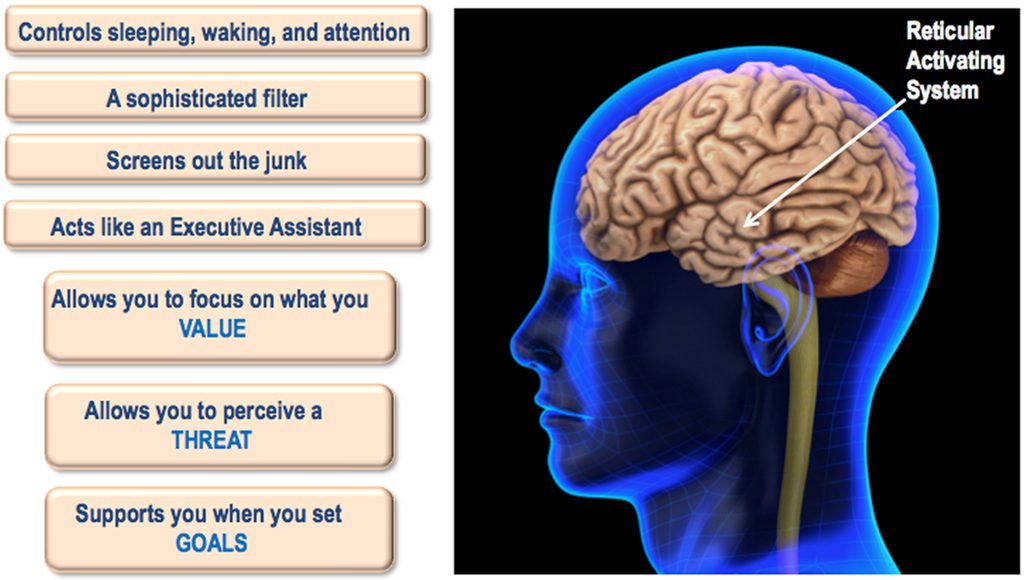
Your senses deliver around one billion bits of raw sensory data every second, but your conscious mind can process only 10–50 bits per second. Because of this enormous gap, the brain must filter almost everything. It uses a multi‑layered system — especially the Reticular Activating System (RAS) and the thalamus — to decide what gets through and what gets deleted.

The filtering process prioritises information based on:

  • Survival relevance (threat, movement, sudden changes)
  • Novelty (anything unexpected)
  • Biological needs (pain, hunger, temperature)
  • Emotional significance (fear, attachment, reward)
  • Personal relevance (your name, your child’s voice, your goals)

Anything that does not meet these criteria is suppressed or deleted before you ever become aware of it.

The brain’s filtering is driven by two major forces working together:

  1. Survival relevance — hard‑wired, biological, automatic
  2. Learned relevance — shaped by knowledge, perception, childhood experiences, and beliefs

This combination determines what gets processed and what gets ignored.

A useful analogy is to think of the brain as a radio receiver. A radio receives millions of frequencies at once, but you only hear the station you are tuned to. The RAS acts like the tuning dial: it selects the “frequency” (information) that matters and filters out the rest.

Crucially, you can train your brain to tune differently. Through learning, repetition, and experience, you can change which information is filtered out and which information is considered important. This is the foundation of many subconscious‑mind training techniques, cognitive reframing, and attentional retraining.

Over time, these processes can influence how you interpret the world, how you respond to challenges, and how you experience emotions. While they are not a cure‑all, they demonstrate that the brain is plastic — it can be rewired to support healthier patterns of perception, attention, and emotional regulation.

You meet people on the same level of psychological wound as you

You meet people on the same psychological wound as you. You also leave people if you evolve out of that and they haven’t been able to.

This concept, highlighted by neuroscientist Dr. Tara Swart, explains why we often repeat unhealthy relationship cycles. Instead of seeking what is truly healthy, our brains look for what feels familiar.

How Psychological Wounds Shape Relationships

Familiarity over safety: If your past involved chaos or emotional distance, your nervous system mistakes those painful dynamics for “home”.

Matching stress levels: People unconsciously sense stress hormones and emotional pain in others, drawing matching energies together.

Replaying old stories: We may choose partners who mirror past hurts, hoping to force a different, happier ending to an old story.

What Happens When You Heal

Changing frequencies: As you do the inner work to heal your core self, your tolerance for dysfunction drops.

Natural parting: When you evolve past a certain level of wounding, you naturally pull away from or leave behind people who remain stuck in their pain.

New alignment: A healed emotional state attracts stable, supportive, and emotionally safe connections.

Your Beliefs

A belief is a mental state or acceptance that an idea, thing, or proposition is true, even without absolute proof or direct knowledge. Beliefs act as inner maps that help people make sense of the world, guide everyday choices, and shape personal identity

Your beliefs become your identity. Your beliefs become your prism through which you will see the world and receive information. Your beliefs will filter the information that does not match them.

People often reject facts that conflict with their beliefs because changes feel like a threat to safety and self-image. They grow from repetition, personal background, and lessons from family or society. Deep, firm ideas about oneself, others, and the world are called core beliefs.

Belief

A feeling of certainty that something exists or is true. Nelson Mandela’s belief in equality and justice inspired many people around the world to fight for human rights and strive for a better future.

Faith

Strong trust or confidence in something or someone. Rebecca has a deep faith in the power of kindness.

Conviction

A firmly held belief or opinion. Their shared conviction in the importance of education united them in their efforts to improve schools in their community.

Value

Principles or standards of behaviour. Paul’s strong belief in the value of hard work
and perseverance has always guided his career choices.

Principle

A basic rule or idea that guides how something is done or how someone
behaves. Mark lives by the principle of treating others as he wants to be treated.

Limiting Belief

A limiting belief is a thought, assumption, or conviction that holds you back from reaching your potential, taking action, or achieving what you want.

It acts like an invisible mental barrier. These beliefs are often false, exaggerated, or outdated, yet they feel true and influence decisions, behaviour, and self-image.

Why You’re Really Stuck

Most people think they’re stuck because of their job, money, relationships, or external situation. The real reason is usually simpler: you’re still holding on to something that is already good—but no longer great.

You must let go of something good to get something great.

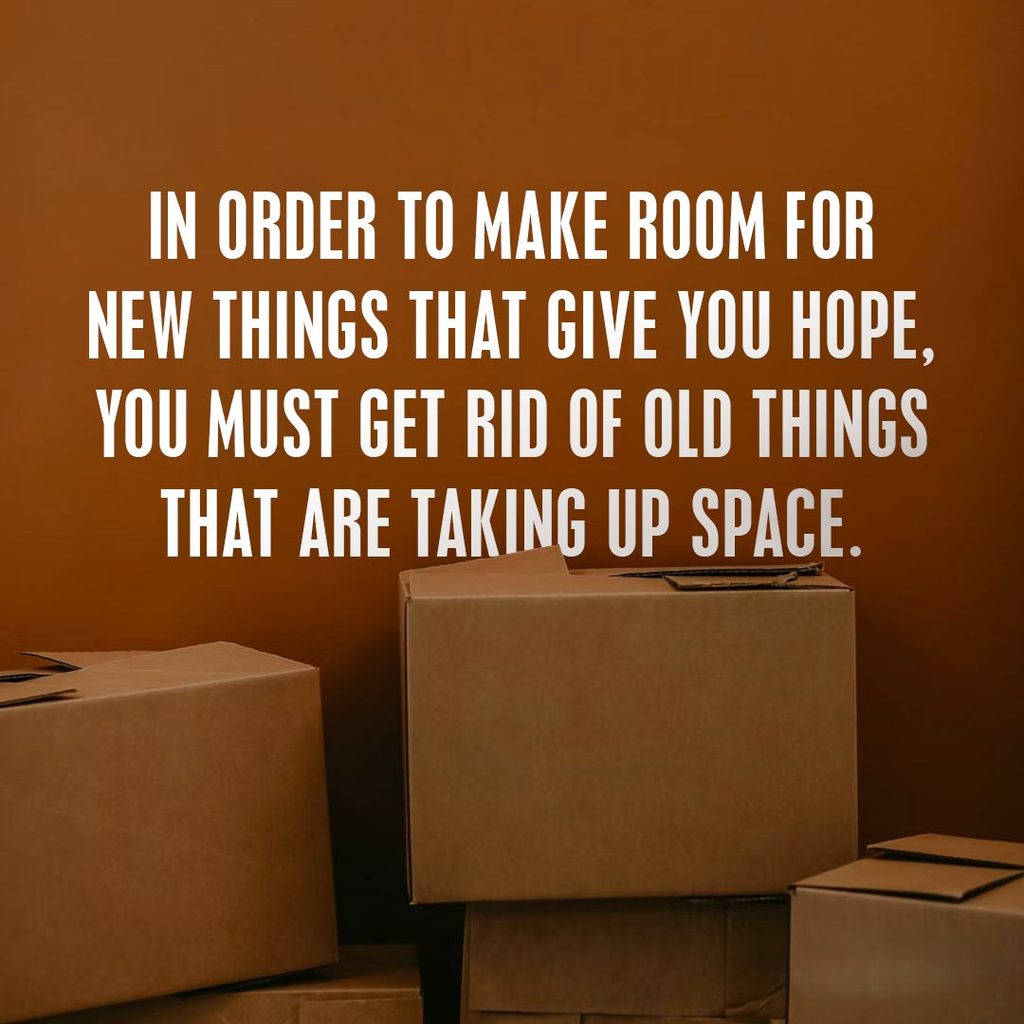
Growth requires space. Just as a forest needs fire to clear old undergrowth so new life can emerge, you often need to release what’s currently working before something better can arrive. Clinging to the familiar keeps the next level from entering.

This idea appears throughout success literature—from Napoleon Hill’s “in every adversity is the seed of a greater benefit”. Even the biblical story of Job shows that greater abundance returned only after complete surrender and release of attachment. After losing everything, Job surrendered without attachment to a specific outcome. Only then did he receive back far more than he had before.

The practical takeaway is clear: if your life feels stalled despite hard work, the blockage is rarely external. It’s the grip you still have on what is already there. Let it go, create the void, and make room for what’s next.

You’re not stuck because of circumstances. You’re stuck because you’re still holding on to what’s already there. Release it, create the space, and better things can arrive.

Your life is your story

Your life is your story. No one else gets to write it. No one else gets to define it.

Every choice you make, every risk you take, every dream you chase- it’s yours. People will doubt you, judge you, misunderstand you, but it doesn’t matter. This is your journey, your fight, your legacy. Own it.