
October 2026 – Farshad Farahnak. All rights reserved.
Most of us think of journaling as a way to clear our heads or track our days. What if the simple act of putting pen to paper could also speed up physical healing, ease chronic conditions, and rewire how your brain handles stress?
A growing body of research suggests exactly that. And the method matters: writing by hand about meaningful experiences appears to produce effects that typing or neutral note-taking often do not.
The Study That Sounds Almost Impossible
In one striking experiment, researchers in New Zealand asked 49 older adults to write for just three days. One group wrote about the most upsetting events of their lives. The other wrote about everyday activities. Two weeks later, doctors created a small, controlled wound on each person’s arm using a biopsy punch. For the next three weeks, they tracked how quickly the skin closed.
By day 11, the group that had written about difficult experiences had healed up to 76%. The daily-activities group lagged behind at 42%. Diet, medication, and sleep were carefully controlled. The main difference was the writing exercise performed weeks earlier.
Similar patterns show up elsewhere. In a study of more than 100 patients with asthma or rheumatoid arthritis, those who spent 20 minutes a day for three days writing about stressful events showed greater clinical improvement over the following four months than those who wrote about neutral topics. The gains went beyond standard medical care.
Scientists still cannot fully explain the pathway from page to body. Measures of stress hormones, inflammation markers, and self-reported stress sometimes show no clear difference. Yet the clinical outcomes keep appearing. Something about the process works.
Why Putting Feelings Into Words Changes the Brain
Deep in the brain sits the amygdala, a small almond-shaped structure that acts like an alarm. When it fires, heart rate rises, blood pressure climbs, and the body prepares for threat.
Brain-imaging studies reveal a simple intervention that quiets this alarm: labelling the emotion. When people look at upsetting images and name the feeling (“afraid,” “angry”), activity in the amygdala drops. At the same time, a region in the prefrontal cortex involved in regulation lights up. The emotion does not disappear, but its grip loosens.
Journaling takes this further. Instead of a single word, you form full sentences. You stay with the feeling long enough to shape it into language. That process itself appears to shift control from the reactive alarm system toward more deliberate, conscious regulation.
Handwriting Forces the Brain to Slow Down
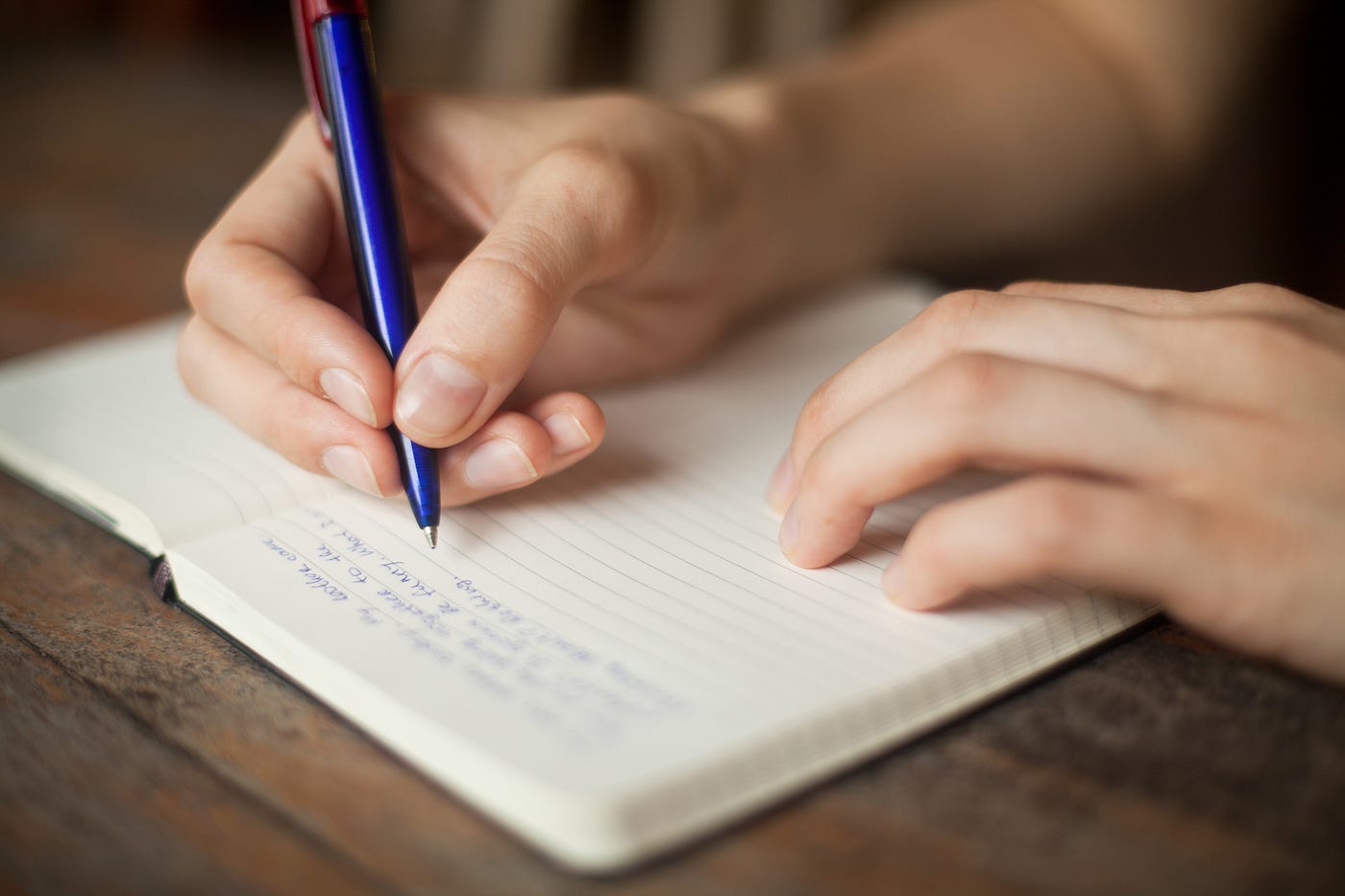
Most of the studies that produce strong results instruct participants to write by hand. Typing does not reliably produce the same effects.
One reason is speed. Most people write by hand at roughly 20 words per minute while thinking much faster. The mismatch forces selection: only some thoughts make it onto the page. That selection process deepens engagement and emotional processing.
EEG research from Norway shows that handwriting (even with a digital pen) creates widespread connectivity in brain-wave frequencies linked to learning and memory. Typing with a finger does not. Handwriting also tends to produce greater emotional disclosure and stronger negative feelings in the moment—exactly the kind of engagement that later predicts better outcomes.
Paper still holds a slight edge over tablets for memory and planning tasks in some studies, but forming letters by hand appears to be the critical ingredient.
Two Effective Paths: Facing Pain or Cultivating Gratitude
Expressive writing about difficult experiences has a long track record, including benefits for people with PTSD. Yet it can feel worse before it feels better. Blood pressure often rises and mood dips during the writing sessions themselves. Many people quit after one uncomfortable try.
A gentler alternative also works well. In a 2018 study, adults who wrote gratitude letters reported better mental health at both four and twelve weeks than those who wrote about upsetting events or received psychotherapy without writing. Gratitude writing reduced toxic emotions such as resentment and envy. Text analysis showed more “we” language and positive emotion words. Other research suggests it can even prime the brain for greater generosity later.
You do not have to choose only one approach. Writing about what hurt you and writing about what you are grateful for both appear capable of leaving the mind and body healthier.
Practical Answers to Common Questions
Does a tablet count?
Mostly yes. Forming the letters by hand matters more than the surface. Paper still wins some memory and planning comparisons, but a digital pen on a screen produces the key brain connectivity.
Cursive or print?
Either works. Cursive is slower, which can be an advantage. Choose the style you prefer.
What if my handwriting is messy?
It still counts. The benefit lives in the motor act of writing and the mental work of choosing words, not in producing a beautiful page.
Does dyslexia change the picture?
Handwriting may matter even more. Studies with young children show that producing letter shapes by hand activates reading circuits in ways that typing or tracing does not.
Fountain pen, ballpoint, or pencil?
No evidence favors one instrument. Pick whatever makes you want to sit down and write.
How to Start
The research protocols are simple and short:
- 15–20 minutes
- 3 or 4 days in a row
- Write about stressful or meaningful experiences, or write a gratitude letter
You may feel worse during the first sessions. That is common and usually temporary. A notebook is not a substitute for professional care. If the material feels overwhelming, seek support.
Tonight you could try one of two things: write about whatever is stressing you, or write the thank-you you never said. Either way, put pen to paper. The evidence suggests it is worth the time.