
You Become the Average of the Five People Around You

August 2026 – Farshad Farahnak. All rights reserved.
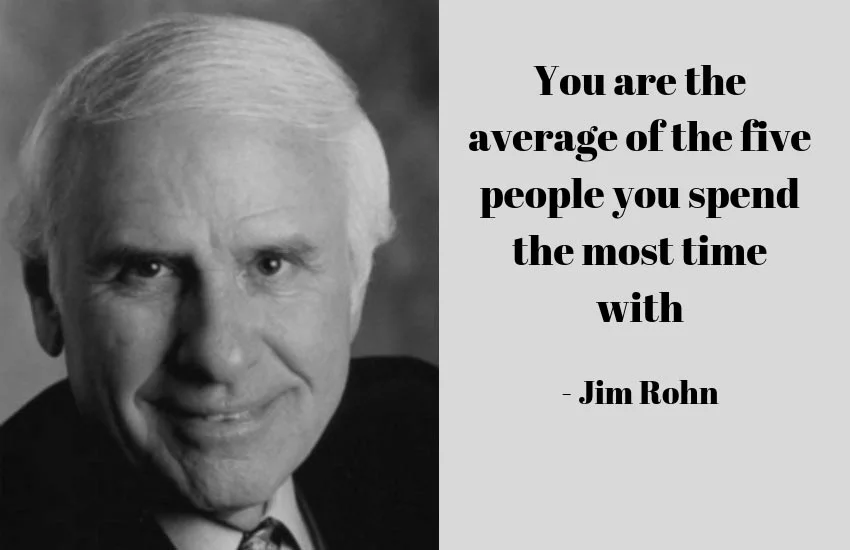
You’ve probably heard the line: you become the average of the five people you spend the most time with. It sounds simple, almost cliché. But it is one of the most practical truths about success and growth.

Those five people quietly shape what feels normal. They influence how you talk about problems, how long you stay with hard things, what level of effort looks reasonable, and whether setbacks feel like temporary data or final verdicts. Over time, their habits, standards, and emotional responses start to feel like your own. That is not mysticism. It is environment.

The toddler already understands this

Watch a toddler learning to walk. They fall. They fall again. They fall a hundred times. And still they get back up.

Why?

Not because they have mastered some advanced mental technique. Not because they have read books on resilience. They keep trying because everywhere they look, people are standing and walking. Upright movement is simply the normal way of being in their world. Every adult and older child around them is living proof that the goal is possible and expected. Falling does not redefine what is normal. The walkers do.

Now imagine the opposite. Suppose a child grew up in an environment where no one stood or walked. Crawling, or some other method, would feel like the standard. Effort toward upright walking would seem strange, maybe even unnecessary. The child would not keep trying the same way, because the surrounding evidence would point somewhere else.

That is exactly how adult life works.

The five people closest to you are constantly broadcasting what is normal. If they treat ambitious effort as ordinary, if they keep moving after setbacks, if growth is simply what people in that circle do, then persistence feels natural. Fear of failure shrinks because failure is just part of the shared pattern you see every day.

If those same five people have largely stopped trying, if they treat big goals as unrealistic or effort as optional, then quitting starts to feel like the reasonable, adult response. Your internal drive is real, but it is heavily shaped by the models in front of you.

This is why the quality of your associations matters so much. You do not rise to the level of your goals. You fall to the level of your environment. The people around you set the baseline for what counts as possible, what counts as enough, and how long it is acceptable to keep trying.

If the current five are not modelling the direction you want to go, you have a clear option: change the people around you. That does not always mean dramatic exits or harsh judgments. Sometimes it means spending less time with certain people and more time with others. Sometimes it means seeking out new circles where the standards match the future you want. The principle remains the same. If you can change the people around you, change the people around you.

Protect the environment that keeps effort looking normal. Surround yourself with people who are still walking. The toddler already knows how powerful that is.
Why Relationships Get Harder Over Time and Why That’s Normal

August 2026 – Farshad Farahnak. All rights reserved.

When you first meet someone, you see them from a distance. That view is selective, incomplete, and usually flattering. Driven by attraction, the mind fills the missing gaps with optimistic assumptions, highlighting charm and strengths while leaving flaws soft or invisible.

As a relationship deepens—especially when moving in together—that distance vanishes. You transition from a wide lens to a magnifying glass, observing the other person’s daily patterns, stress responses, and unpolished habits up close.

It is like viewing a mountain from afar: from a distance, the peak looks smooth and majestic. But as you draw near and begin to climb, the terrain changes. You encounter hidden rocks, steep inclines, and rough surfaces that were invisible from the valley floor.

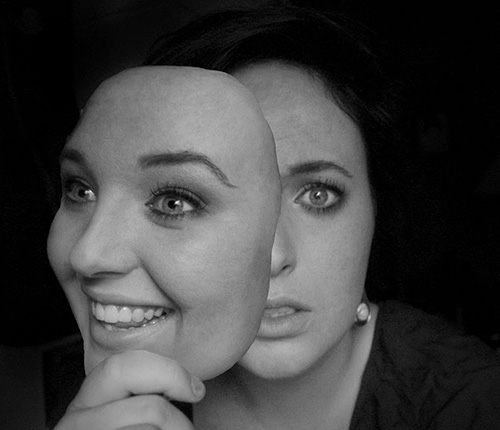
At the same time, the social masks come off. Outside the home, maintaining a managed, pleasant persona takes energy. At home, the incentive to perform drops, and it becomes too costly to sustain the ideal self day after day. What emerges is each person’s default operating system: unfiltered moods, default reactions, and raw approaches to frustration or boredom. Because both partners drop their guard simultaneously, the contrast with the early, curated phase can feel jarring.

Crucially, the qualities that initially drew you in can begin to work against you. A protective personality starts to feel overbearing; inspiring standards turn into frequent criticism; refreshing independence feels like emotional distance. The traits haven’t changed, but their daily impact on you has.

Here, frequency becomes decisive. A minor irritation experienced occasionally is manageable. That same behaviour, repeated daily, becomes a steady friction point that the mind registers as a new, frustrating reality. It is like rubbing a cloth against your skin: while pleasant at first, constant repetition over time will eventually cause irritation. Once that skin is raw, even a gentle touch can trigger a sharp, painful reaction.

This dynamic isn’t unique to romance—it unfolds among business partners, close collaborators, and anyone sharing high-interdependence spaces.

Ultimately, relationships rarely become harder because someone suddenly changed. They change because the filters came down, the full picture emerged, and managing that reality requires far more effort than enjoying the initial view. The couples who thrive are simply the ones who recognise this shift and actively learn to navigate the terrain once the masks are gone.

Navigating the Shift in Your Relationship? Recognising that the terrain has changed is the first step. If you and your partner are feeling the friction of the “unmasked” phase and want to build a smoother way forward together, let’s talk.

How Your Brain Filters Reality – RAS

August 2026 – Farshad Farahnak. All rights reserved.

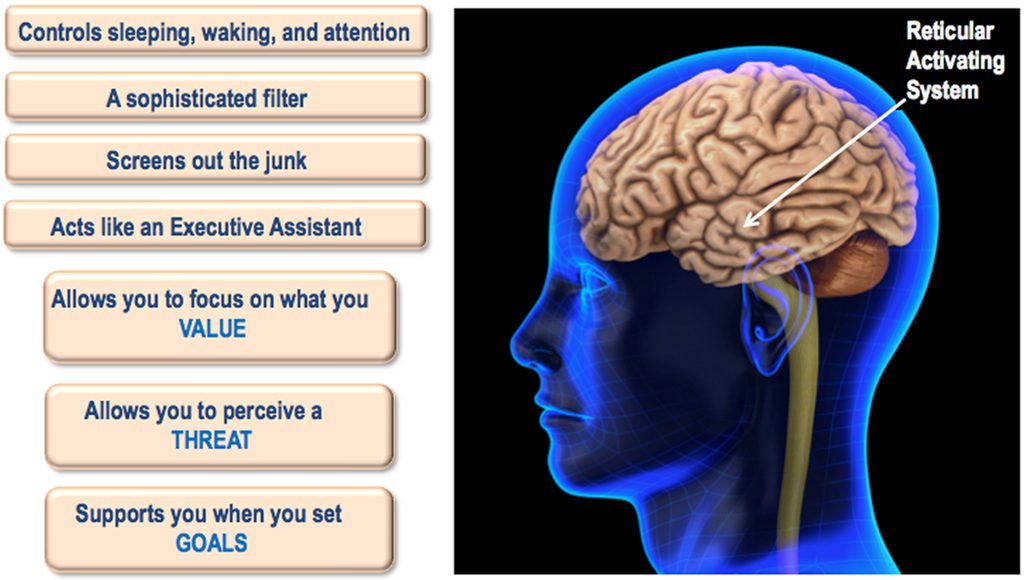
Your senses deliver around one billion bits of raw sensory data every second, but your conscious mind can process only 10–50 bits per second. Because of this enormous gap, the brain must filter almost everything. It uses a multi‑layered system — especially the Reticular Activating System (RAS) and the thalamus — to decide what gets through and what gets deleted.

The filtering process prioritises information based on:

  • Survival relevance (threat, movement, sudden changes)
  • Novelty (anything unexpected)
  • Biological needs (pain, hunger, temperature)
  • Emotional significance (fear, attachment, reward)
  • Personal relevance (your name, your child’s voice, your goals)

Anything that does not meet these criteria is suppressed or deleted before you ever become aware of it.

The brain’s filtering is driven by two major forces working together:

  1. Survival relevance — hard‑wired, biological, automatic
  2. Learned relevance — shaped by knowledge, perception, childhood experiences, and beliefs

This combination determines what gets processed and what gets ignored.

A useful analogy is to think of the brain as a radio receiver. A radio receives millions of frequencies at once, but you only hear the station you are tuned to. The RAS acts like the tuning dial: it selects the “frequency” (information) that matters and filters out the rest.

Crucially, you can train your brain to tune differently. Through learning, repetition, and experience, you can change which information is filtered out and which information is considered important. This is the foundation of many subconscious‑mind training techniques, cognitive reframing, and attentional retraining.

Over time, these processes can influence how you interpret the world, how you respond to challenges, and how you experience emotions. While they are not a cure‑all, they demonstrate that the brain is plastic — it can be rewired to support healthier patterns of perception, attention, and emotional regulation.