
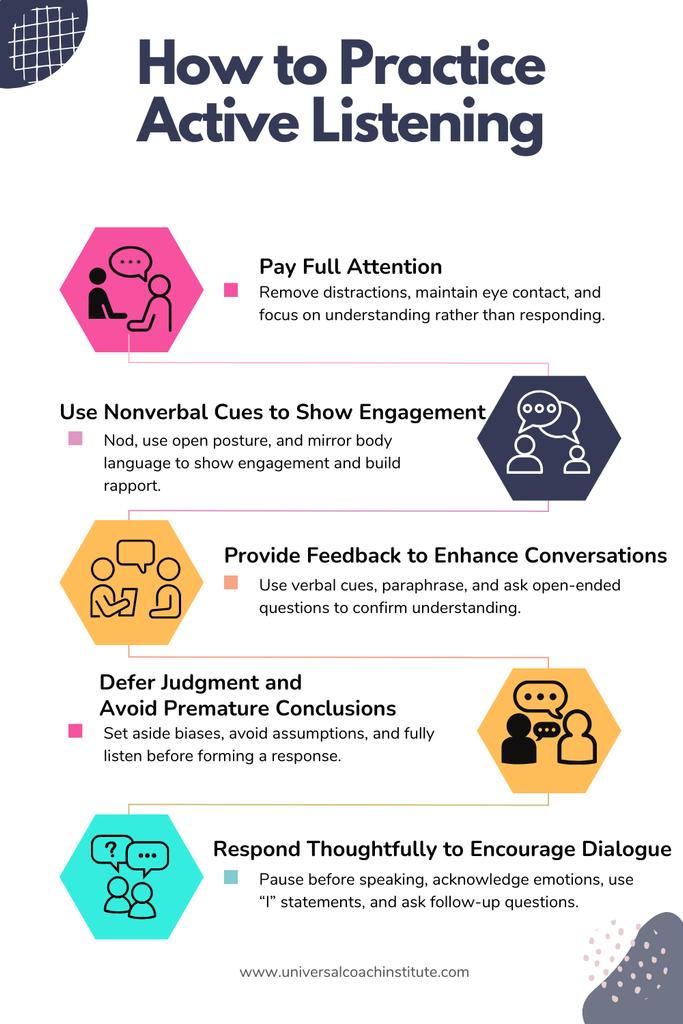
Stephen Covey (in The 7 Habits of Highly Effective People) correctly identified that most people listen “autobiographically” — they evaluate, advise, probe, or interpret from their own perspective instead of truly understanding the other person. He described a better approach (“empathic listening”/reflecting both content + feeling), but he couldn’t fully explain why it works or why people fail at it under pressure.
Douglas Noll explains the missing piece using neuroscience:
- Simply naming the other person’s emotion (“You feel frustrated…”) — a technique called affect labelling — calms their nervous system.
- It increases activity in the brain’s regulation centres and decreases activity in the threat centre (amygdala).
- This creates what Covey called “psychological air” — the person feels heard and can finally think clearly.
Why Most People Still Fail
Even when people know the technique, it collapses the moment the conversation gets tense, because the listener’s own nervous system activates. They start:
- Making statements sound like questions
- Adding explanations (“because…”)
- Jumping to solutions too early
Their attention turns inward to protect themselves instead of staying focused on the other person.
The Real Solution
True empathic listening is not just a technique — it is a trainable neurological skill. Noll has spent 25 years teaching it in high-stakes environments (boardrooms, courtrooms, and maximum-security prisons, where he trained over 3,000 inmates as mediators). The skill can be developed so that staying present and naming emotions becomes automatic, even under pressure.
Bottom Line
Stop relying on classic active-listening scripts. Learn to accurately name emotions and stay silent long enough for the other person’s nervous system to settle. That is what actually de-escalates conflict and opens the door to real conversation.