
Daily Habits of Millionaires

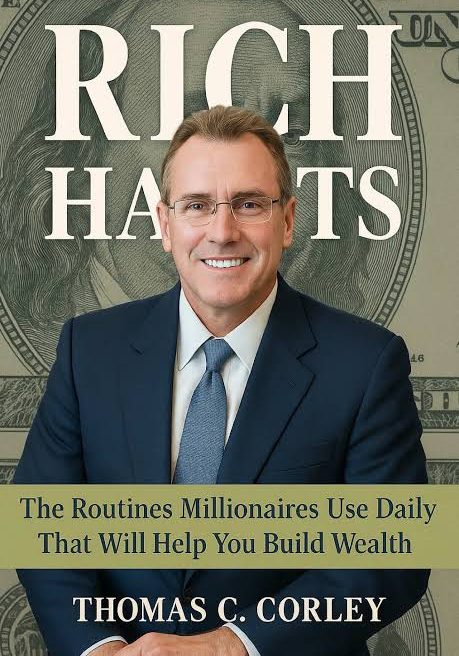
Thomas C. Corley: The Researcher Who Mapped the Daily Habits of Millionaires

While many people debate whether wealth comes from luck, talent, or inheritance, one researcher spent five years studying what the rich actually do every day—and how those habits differ from people living in poverty.

That researcher is Thomas C. Corley, a CPA, certified financial planner, and author best known for his “Rich Habits” studies.

Who Is Thomas C. Corley?

Corley is a practical, numbers-driven researcher rather than a pure academic. As a financial professional, he became curious about the gap between people who build lasting wealth and those who struggle. Instead of relying on theory, he decided to interview both groups directly and track their daily behaviours over time.

His work resulted in the book Rich Habits: The Daily Success Habits of Wealthy Individuals and several follow-up titles that expanded on the original findings.

The Research

Over five years, Corley interviewed 233 wealthy individuals (177 of them self-made millionaires) and 128 people living in poverty. He gathered more than 340 data points through detailed questionnaires and conversations. The goal was simple: identify the specific habits that consistently separated the two groups.

The results revealed clear, measurable differences in how each group spent their time, money, and attention.

Key Findings

Here are some of the strongest patterns from Corley’s research:

HabitRich / Self-MadePoor
Read for self-education 30+ minutes a day88–96%~2%
Set and review specific goals daily80–95%~12%
Save 20% or more of income94%+Near 0%
Believe wealth comes mainly from habits (not luck)84–97%Only ~21%
Exercise regularlyHighLow
Track finances / balance checkbook monthly94%+~32%

Corley also identified four main paths people took to become millionaires:

  1. Saver-Investor — Consistent saving and prudent investing (average ~32 years to roughly $3.3 million)
  2. Virtuoso — Becoming highly skilled in a valuable field
  3. Big Company Climber — Rising through the ranks of a large organisation
  4. Dreamer-Entrepreneur — Building a business (the fastest path in his data: average 12 years to about $7.4 million)

Other recurring themes included continuous learning, deliberate relationship-building and mentorship, optimism, calculated risk-taking, and steady daily progress on long-term goals.

Why It Matters

Corley’s research is especially useful because it focuses on behaviours most people can start changing immediately. Unlike studies that examine only the ultra-wealthy or pure personality traits, his work highlights everyday disciplines—reading, goal-setting, saving, exercising, and networking—that compound over years.

The message is empowering: wealth is less about secret knowledge or rare talent and more about consistent habits practised over a long period. Many of the millionaires in his study were not flashy high-earners; they simply made better daily choices with their time and money than their peers.

In a world full of get-rich-quick advice, Corley’s findings offer something rarer—a clear, research-backed picture of what ordinary people who became millionaires actually did differently, day after day.

What makes someone extremely wealthy?

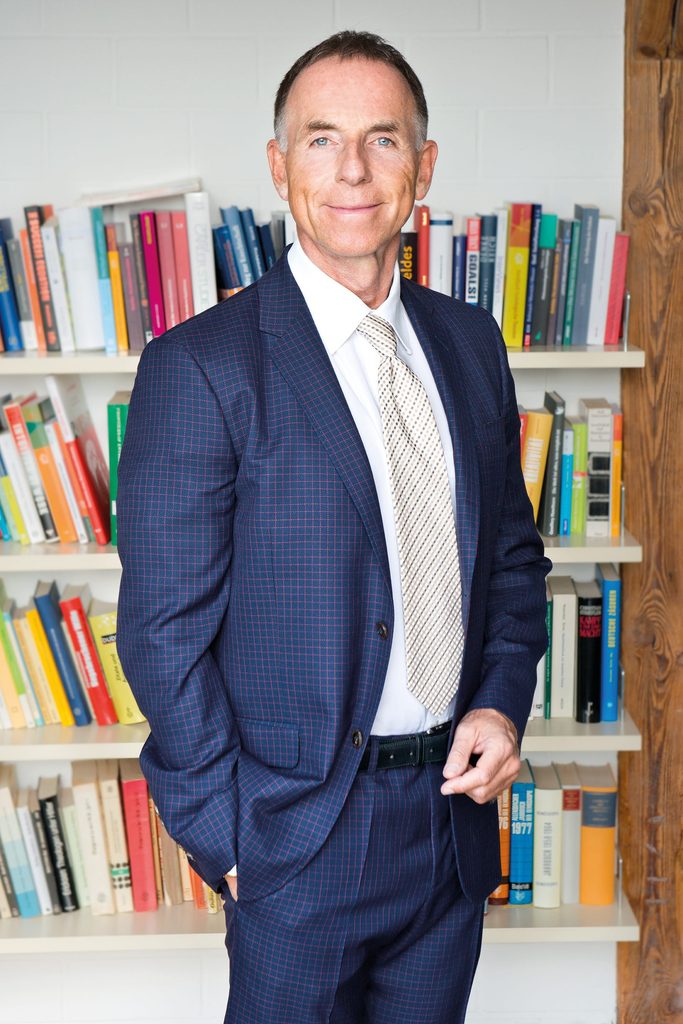
Rainer Zitelmann: The Historian Who Interviewed the Super-Rich

What makes someone extremely wealthy? Is it genius, luck, inheritance—or something deeper in their personality and mindset?

German historian and sociologist Rainer Zitelmann set out to answer that question by doing what few researchers have managed: sitting down for long, candid conversations with dozens of multimillionaires and billionaires.

Who Is Rainer Zitelmann?

Born in 1957, Zitelmann holds two doctorates—one in history (summa cum laude) and another in sociology. He has worked as an academic, newspaper editor, and successful entrepreneur. In 2000 he founded a PR firm focused on the real-estate industry, built it into the market leader, and sold it in 2016. He is also a prolific author whose books have been translated into dozens of languages.

His second doctoral dissertation, published as Psychologie der Superreichen (English title: The Wealth Elite), is his most distinctive contribution.

The Research

Between 2015 and 2016, Zitelmann conducted in-depth interviews with 45 ultra-high-net-worth individuals. Most were self-made. Their net worth typically ranged from €30 million to €1 billion (some higher). Each conversation lasted one to two hours, producing roughly 1,700 pages of transcripts. Nearly all participants also completed a detailed Big Five personality test.

What He Found

Several clear patterns emerged:

  • Personality profile: Higher conscientiousness, extraversion, and openness to experience. Lower neuroticism (greater emotional stability) and lower agreeableness (more willingness to engage in conflict).
  • Nonconformism: Many described themselves as people who enjoy swimming against the tide and challenging conventional opinion.
  • Sales ability: Two-thirds said persuasion skills were decisive for their success; more than one-third attributed 70–100% of their achievements to the ability to sell and convince others.
  • Intuition over pure analysis: Gut feeling—built through years of experience—often mattered more than formal academic knowledge.
  • Education: No positive link between top school or university grades and extreme wealth. Competitive sports and early entrepreneurial activities were more formative.
  • Mindset: Strong internal locus of control. When things went wrong, they tended to blame themselves rather than external circumstances, then adjusted and moved forward.
  • Motivation: Freedom and independence ranked higher than luxury for many of them.

In short, the super-rich in Zitelmann’s study were not simply the smartest students or the luckiest heirs. They were resilient, sales-oriented, nonconformist entrepreneurs who took responsibility for both success and failure.

Why It Matters

While books like The Millionaire Next Door focused on everyday millionaires and frugal habits, Zitelmann zoomed in on the extreme upper end—people who built or multiplied fortunes on a much larger scale. His work adds a psychological dimension that pure economic data often misses.

It also challenges common assumptions: academic excellence is not a reliable predictor of extreme wealth, and the ability to persuade others may be more valuable than technical brilliance alone.

Zitelmann continues to write about wealth, capitalism, and public attitudes toward the rich. His research remains one of the rare close-up looks at the mindset of people who have reached the very top of the wealth pyramid.

Decoding Entry into the Circle of Power and Wealth

The biggest mistake most people make is thinking that once they become rich, they’ll enter the circle of the powerful and wealthy. But the reality is exactly the opposite.

First you enter that circle, and then you see opportunities that others don’t even know exist — and those opportunities create wealth for you.

But the real question is: What opens the door to this circle?

Not money. Not degrees. Not fame.

The key to entering this circle is trust.

Influential people evaluate your credibility before they look at your assets. Before doing business with you, they assess the risk of associating with you. They usually ask themselves three questions:

  1. Does this person create value for others?
  2. Can they be counted on in difficult times?
  3. Does having their name next to mine increase or decrease my own credibility?

Those who manage to enter this circle first create value, then build trust, and finally gain access to opportunities that most people never even see.

This is the difference that looks like luck from the outside, but it’s not luck. It’s the result of trust, credibility, and a network built over years.

Decoding the closed circle of the powerful and wealthy can be summarized in one sentence:

Money is not the ticket to entry. Trust, credibility, and the value you create for others open doors that money alone can never open.