
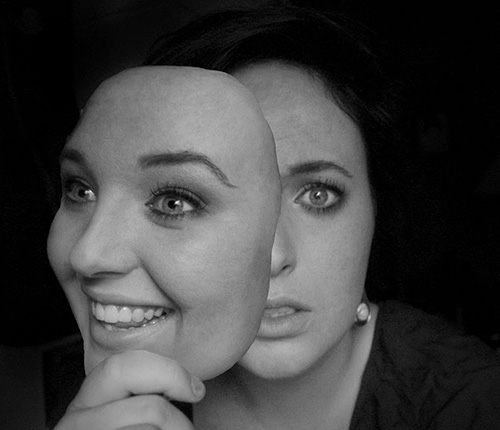
When you first meet someone, you see them from a distance. The view is limited, selective, and usually flattering. Attraction fills in the gaps with positive assumptions. You notice the strengths, the charm, the parts that fit the picture you want. The flaws stay soft or invisible.
As the relationship deepens and you start living together, the distance disappears. You now see the person up close, every day, without the buffer of separate lives. It’s like switching from a distant view to a magnifying glass. Patterns that once appeared only occasionally become clear. Habits, reactions under stress, small irritations, and the less polished sides of character come into focus.
Also, most of us wear social masks. Outside the home we present a more carefully managed version of ourselves—the version that fits the situation, protects our image, and keeps things smooth. Maintaining that mask takes energy. At home, the incentive and the capacity to keep performing both drop. When two people live together, both gradually set the masks aside. The private self appears: the default reactions, the unfiltered moods, the ordinary ways of handling frustration, boredom, and disagreement.
This mutual dropping of the mask is rarely dramatic or intentional. It simply becomes too costly to sustain the earlier performance day after day. What emerges is closer to each person’s everyday operating system. And because both partners are doing it at the same time, the contrast with the earlier, more curated phase of the relationship can feel sharp.
Furthermore, traits that once attracted you can start to work against the relationship. A strong personality that felt protective can later feel overbearing. High standards that once inspired can turn into frequent criticism. Independence that seemed refreshing can register as emotional distance. The same qualities do not disappear; their effect changes once they are directed at you, repeatedly, inside a shared life.
Frequency is decisive. Something you can accept once or twice is often manageable. The same behaviour, present most days, becomes a friction point. The mind stops treating it as an exception and begins treating it as the new normal. Over time, that steady friction creates distance, resentment, or recurring conflict.
This pattern is not limited to romantic relationships. Business partners, close collaborators, and people in other high-interdependence situations often experience a similar shift once the professional or social performance thins and the everyday self takes over.
The result is that many relationships feel different—and harder—over time. It is rarely because one person suddenly became someone else. More often, the filters came down, the full picture became visible, and the daily reality of living with that fuller picture proved more demanding than the distant, idealised version. Couples who navigate this well are usually the ones who notice the shift and actively renegotiate how they relate to each other once the masks are no longer in place.