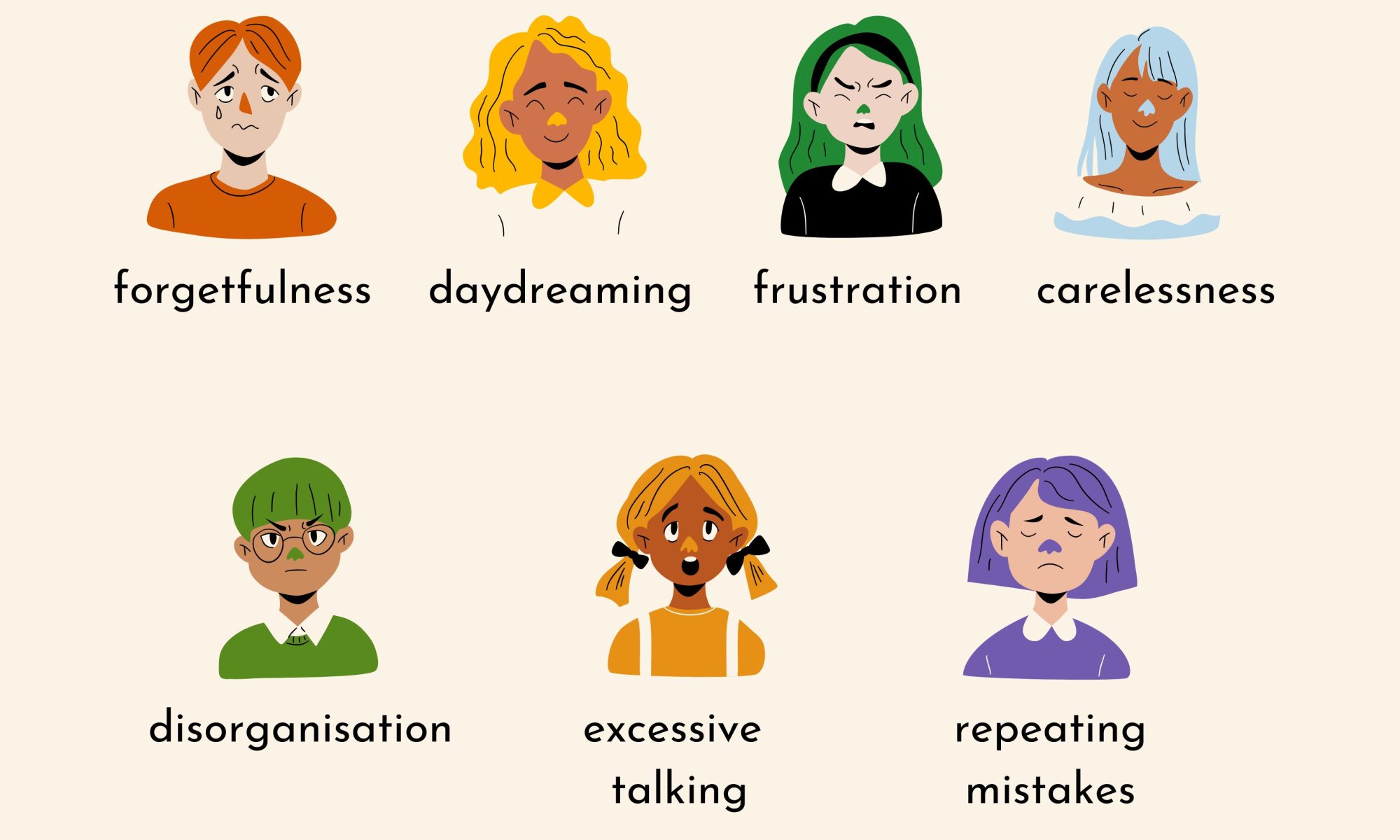
ADHD can make everyday life feel harder than it should.
You may know what you want to do, but still struggle to start. You may build routines that work for a few days and then disappear. You may feel overwhelmed, frustrated, or stuck in the same patterns despite trying hard.
The CLARITY Framework offers a structured way to slow things down, understand what is happening, and build strategies that fit the individual rather than forcing a one-size-fits-all solution.
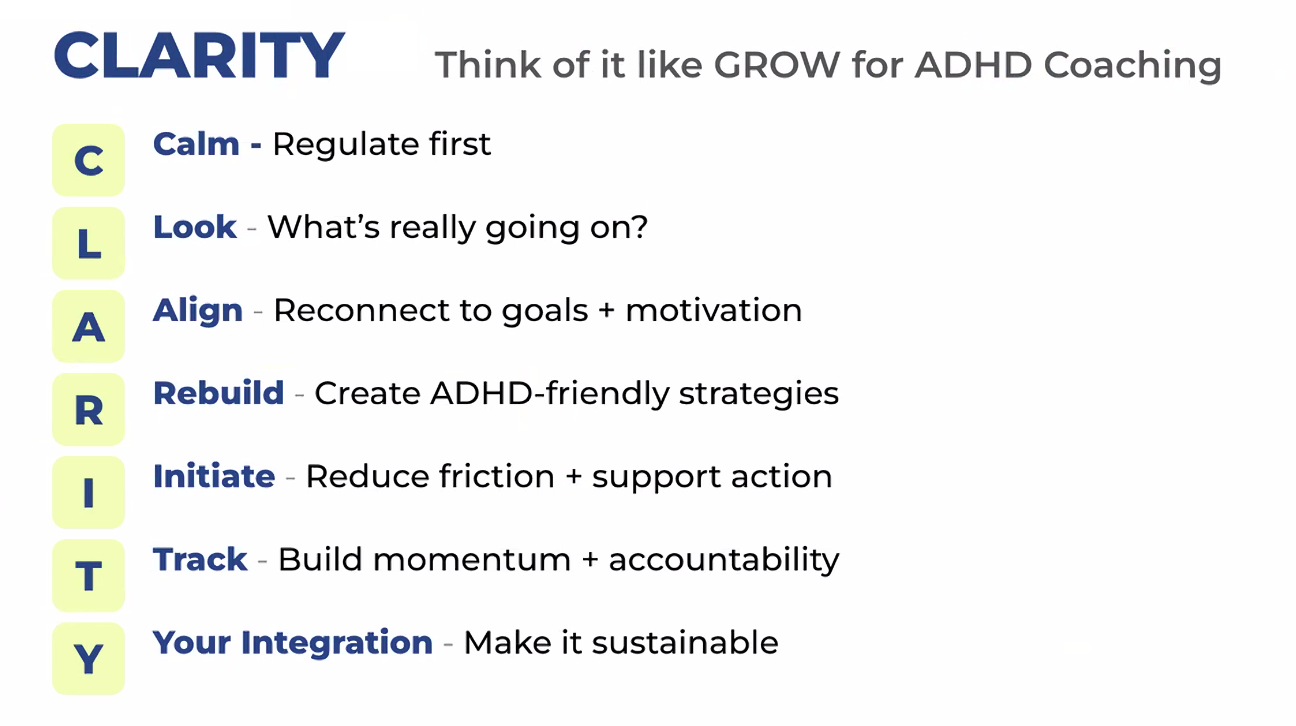
C — Calm
Before trying to solve the problem, we regulate first.
When someone is overwhelmed, frustrated, or emotionally overloaded, it can be difficult to think clearly or take useful action.
Calming creates enough space to look at the situation more clearly.
L — Look
Next, we explore what is really going on.
Is the difficulty caused by overwhelm, low motivation, task initiation, unclear priorities, emotional resistance, unrealistic expectations, or something else?
Instead of assuming the problem is laziness or lack of effort, we look underneath the behaviour.
A — Align
We reconnect the person with their goals, values, and motivation.
ADHD strategies are more likely to work when they feel personally meaningful.
Alignment helps answer:
Why does this matter to me?
R — Rebuild
Once the difficulty is clearer, we begin creating ADHD-friendly strategies.
That may mean changing the environment, simplifying a task, using external reminders, building flexible routines, or finding a different way to approach the problem.
The strategy should fit the person — not the other way around.
I — Initiate
Knowing what to do is not always enough.
For many people with ADHD, starting is the hardest part.
This stage focuses on reducing friction and making the first step easier, smaller, and more achievable.
T — Track
Progress becomes easier to understand when we notice what is working.
Tracking helps build awareness, momentum, and accountability.
It also helps identify when a strategy needs to be adjusted.
Y — Your Integration
The final goal is not to create another short-term system.
It is to integrate what works into everyday life in a way that feels realistic and sustainable.
The aim is not perfection.
It is to build approaches that can adapt as life changes.
Why CLARITY Matters
The CLARITY Framework creates a simple path:
Calm → Look → Align → Rebuild → Initiate → Track → Your Integration
It helps move the conversation away from:
“Why can’t I just do this?”
and towards:
“What is happening, what do I need, and what could work better?”
That is the heart of ADHD coaching.
Not forcing yourself harder.
Understanding yourself better, reducing friction, and building strategies that work with your brain.